
Few materials invite you to reach out and touch them quite like suede. Run your fingertips across it and you feel that soft, velvety nap that’s so appealing. But what actually is suede, and how does it differ from the full grain leather many of us know? Here at Lumengin, it’s a question we’re asked often, so we thought we’d explain.
What is suede?
Suede is leather, but it’s made from a different part of the hide. A hide has two faces: the outer grain side, where the hair once grew, and the inner flesh side. The grain layer is the toughest, most tightly packed part of the skin. Beneath it lies the corium, a looser network of fibres.
To make suede, the grain layer is removed (or the hide is split, so that only the lower layer is used), and the split or flesh side is buffed until its fibres lift into a fine, raised surface called a nap. It’s this nap that gives suede its characteristic soft feel and its gentle, matt colour that seems to shift as you brush it one way and then the other.
Full grain leather is the opposite approach. The grain is left completely intact, with nothing sanded or buffed away. That keeps the strongest fibres in place and shows the natural character of the hide, including small marks and variations in the surface.
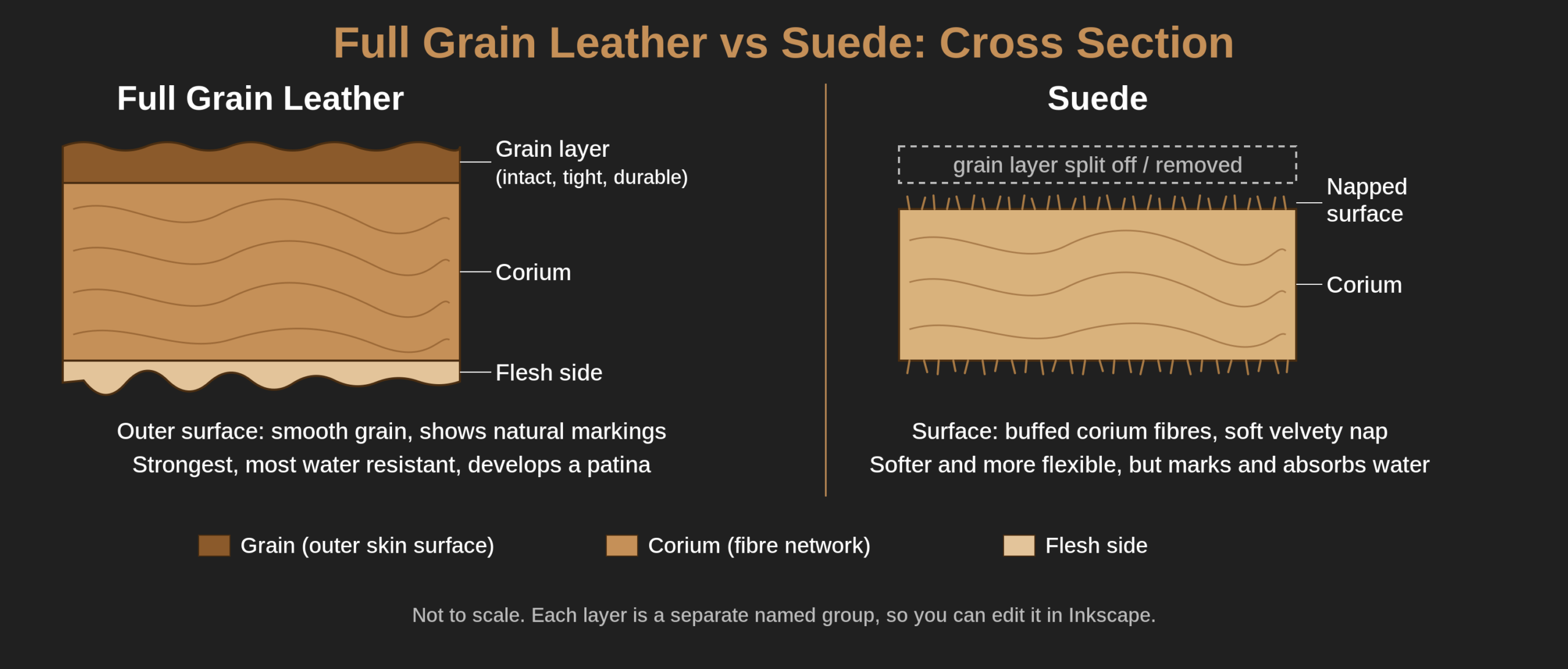
Suede and full grain leather compared
Neither material is simply better than the other. They have different strengths, and the right choice depends on how you’ll use and enjoy a piece.
| Suede | Full grain leather | |
|---|---|---|
| Surface | Soft, velvety nap | Smooth natural grain, intact |
| Main benefits | Wonderfully soft texture; flexible; lighter in weight | Strong and durable; good water resistance; develops a rich patina over time |
| Drawbacks | Lower water and stain resistance; needs more care; less durable | Stiffer at first; shows scratches; needs breaking in |
| Ageing | Nap can flatten or wear in high-contact areas | Darkens and softens with use, gaining character |
Not all suede is equal
Because suede relies so much on the quality of its fibres, the difference between a cheap suede and a fine one is easy to feel once you know what to look for. Lower-cost suede is often made from lower-grade splits of mature hides, where the fibres are coarser and more loosely packed. The best suede is mainly produced from calf, whose skins have finer, denser fibres. Fine suede also requires more care and processing at the tannery, from selecting the skins to splitting, finishing and buffing the nap evenly, which is part of why it costs more.
| Cheap suede | The best suede | |
|---|---|---|
| Nap | Rough, shaggy | Fine and velvety |
| Fibres | Loose, can shed | More compact |
| Wear | Wears and pills faster | Longer lasting |
| Typical source | Lower-grade splits of mature hides | Mainly produced from calf |
| Tannery work | Less processing | More care and processing |
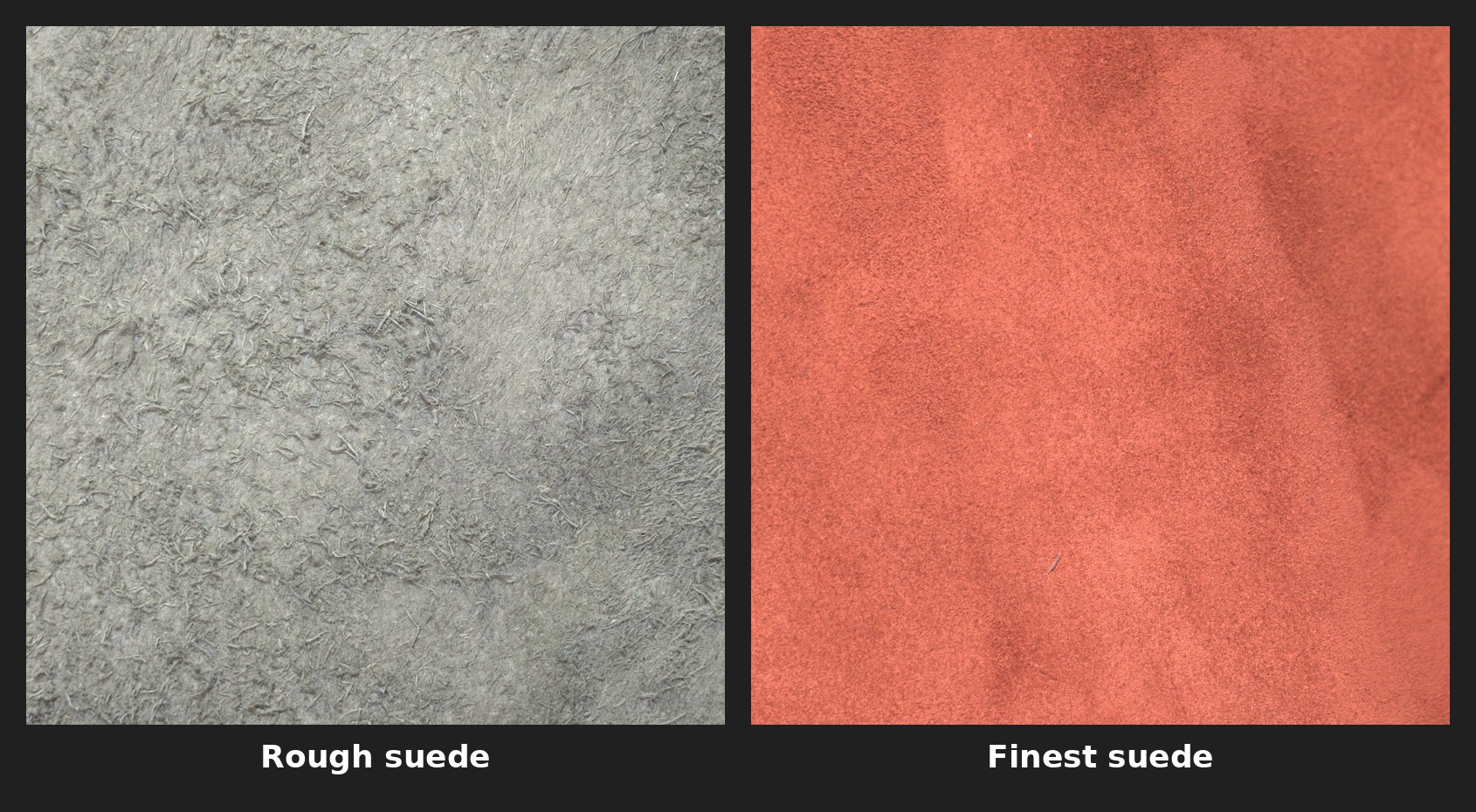
A simple test is to brush the surface lightly with your hand. Good suede feels even and dense, with a short nap that changes colour smoothly. Poorer suede tends to feel fluffy or uneven, and loose fibres may come away on your fingers.
Caring for suede
Suede asks for a little more attention than smooth leather, but the routine is simple:
- Brush it regularly with a soft suede brush to lift the nap and remove dust.
- Apply a suede protector spray before first use, and again from time to time.
- Keep it away from heavy rain where possible; if it gets wet, blot gently and let it dry naturally, away from direct heat.
- Use a suede eraser on small marks, working gently.
- Store it in a breathable dust bag, out of direct sunlight, to protect its colour.
Suede at Lumengin
We love working with suede for the warmth and softness it brings to a piece. Our Sand suede bag is a good example: soft to the touch, light to carry, and a colour that pairs beautifully with almost anything. Like all our leather goods, it’s made with care here in Shrewsbury.
If you would like to see our suede pieces alongside our full grain leather goods, take a look around the shop. And if you’ve any questions about which material would suit you best, we’re always happy to help.